Featured

My true feelings about Research

Describe your experience or experiences with research as a subject. How do you feel about research? Do you see any benefits and/or downsides in using research in social work practice? What are your fears and concerns, if any? How do you think this will impact upon your motivations and work for this course?

Hmm..research.

I don’t really mind it, if it’s something I am interested in learning. I do find it tedious, but also very necessary to inform myself and others about certain findings. I’ve always told myself that I enjoy writing research papers, but that was before I had to write a literature review for my first graduate course. It was overwhelming. There was a lack of guidance from my professor and so I kind of gave up while writing it because I had no idea what I was doing right and what I was doing wrong. So now, no, research papers, literature reviews, etc., are not my favorite realm any longer.

Research is obviously very important to any field of subject. In order to be master’s of our trade, we need to keep reading challenging information and keep on learning new things. As discussed in class, we’re changing all the time and we need to keep up with it. Research is a great way to keep learning new things, new trends and finding out what works and what doesn’t. I actually am looking forward to finding out new statistics every time I do a research paper because there’s almost always at least one bit of information that shocks me. I just hate the dang process.

If I’m doing to be honest, the only real fear or concern I have for our literature review and research proposal paper is really just finding the information that I need to have an all-inclusive lit review & proposal paper. I know it’s going to be time consuming and I, personally, know I will be less likely to look at articles that disprove my proposal because it will be more work for me. But I’m in a master’s program, so what else should I expect?

It’s the end of the world/class as we know it.

I’m not going to lie Professor Guy, this class was a tough one. I think I underestimated how much work goes into research at a social work level. Maybe underestimated is the wrong word. I just don’t think I fully understood how much goes into it. I knew there was a lot; it is research after all. I just didn’t acknowledge all the stipulations that go into research work.

I didn’t really have any expectations when starting this class to be honest with you. I’m not sure if that’s a good or a bad thing. But, I did learn a lot. While this class was trying for me, especially differentiating between different types of research methods, data collections, qual vs. quantitative, I did come out of it with much more insight than I think I could have gotten anywhere else. I think because I found it so challenging, it made me retain more information and appreciate the art of it all.

As far as insight as my role as a social worker in the research field, I find myself wanting to do SO MUCH. I want to be apart research studies that help with interventions, new ways of thinking and potentially even new policies as well. I think that’s an area that research comes in handy most is our policies. Without facts, policies and methods aren’t put into practice and those facts only come from validated and reliable research studies and experiments.

Ethics & Research

Before class on Monday and learning more about ethics in terms of research, I just incorporated what I know about ethics in other aspects into research. Plagiarism is a big thing every where and not giving credit when it’s due, so I knew that was really important to research as well. Another aspect that makes research ethical or not is the honesty behind it: making sure you are reporting on the entirety of the results and not what you were hoping to, just to make it easier or to have you look better.

What I didn’t know was that you could essentially plagiarize yourself. I didn’t realize that you can do that by publishing your work twice in two different formats. I think that’s also because I didn’t really realize or know that when you do publish a research proposal, that you give away your copyright rights to whoever publishes that work; they essentially own that work as their own legal property. I didn’t realize that it worked that way. It makes sense as to why they would do that though. If you were able to publish your work in multiple different formats, there is no appeal to fight over it and be the only one who does have it.

What also threw me off was that you could potentially alter your proposal once you’ve started it. I think one of the scenarios asked if we thought it was ethical that a researcher noticed that changed variables into dichotomous made the difference that they were looking for and changed it in their proposal. My response was a hard no, and I still am feeling that way personally. I understand that in that scenario, the researcher wasn’t fishing to find something that worked, they just stumbled upon it in a way. And I could see continuing on with that new found change in the research, but I would definitely address it and be honest with it. “We tried it like this for a while and got these results but then, by accident, we found that when this is changed then x, y and z.” Just to be as transparent as possible, because that’s what research should be like.

I don’t know that the ethical issues learned about on Monday would have an effect on the implementation for my proposal. I am trying to make it as clear and clean cut as possible. Maybe I don’t fully understand the question, but I don’t think I had any ethical issues that I was too worried about or that I am in regards of my proposal.

Self-Efficacy and Final Research Paper

I will say, having to do the literature review first and a decent amount of time before the research proposal is due helps a lot. Sure, some of us have a bit of editing to but that main chunk of our paper is completed.

Looking and thinking about the paper as a whole is completely overwhelming, especially when you think about how many points the paper is worth. For me, what has been helping is taking it step by step and trying to knock out a certain section at a time.

I went through the step by step how to write an empirical article and just outlined what I planned to talk about in them; like who my participants will be and what measures I’d use to gather the information. That’s kind of given me the reassurance that I’m not entirely lost when it comes to this project.

Then, I started knocking out by writing the paper one section at a time. I worked and wrote out how I planned to get participants to join, by which method and where. I tried to get as detailed as possible with that section. Then, I moved onto things that dealt with that, primarily where I set up my questionnaires and surveys and now am slowly going into what the surveys look like: what questions are involved and how they are going to be handed out.

I think that’s the biggest thing about that I can do to keep myself calm about this paper and not stressed out is to take it one piece at a time so it’s not this overwhelming massive paper that I’m facing. Instead, it’s just one piece of the puzzle I have to put together every time I work on it.

Research Designs

Well, there’s definitely no shortage in trying to choose a research design. Some are much easier to understand than others.

With my proposal, I feel like I’m having a hard time pinpointing and deciding on certain things like who and how I would sample and research designs too. I think I am looking towards more qualitative methods and designs than quantitative. I think finding the deeper details of SIS and sobriety would lead me to be able to make a generalization about the people who do use SIS. I think you do have to be careful when you decide on your research design because if you don’t have the right plan before starting, then you may not get the data that you you were hoping to get.

I think I will be working along the lines of a descriptive research design. A lot of the methods I plan to use for my proposal are self-surveys type and just having people in their natural settings so some observations. I also think a descriptive research design will be beneficial because it will help explain a phenomena: whether use of SISs increase the rates of successful sobriety from a rehabilitation facility. I’m looking at what happens, not how, when or why things happened the way they did.

Quantitative/Qualitative/-ative

Hmm, I’m not sure that I tend to gravitate towards one type of research method or not. I think both are able to show you many different and important figures and information, but they are used for different things. If I wanted to get a statistical or precise number, to see if there was a decrease or increase by a percentage point, I would typically go with a quantitative method. If I wanted to know more descriptive results that aren’t necessarily point blank black or white, then I would definitely use qualitative. In terms of my research proposal on if safe injection sites increase successful sobriety from a rehabilitation facility, I will have qualitative data. The primary reason for that is because successful sobriety is not one thing or not; it’s a mix of traits that contribute to that sobriety, and all those traits are different for every person.

Of course I think it’s important to see the biases in research methods. I think a big one for qualitative research methods is the bias in interpretation. Everyone can interpret the questions differently and that will obviously effect how they respond, effecting the data you have received.

“Rate your current stress level from 1-5 (5 being the highest)” is a much broader and interpretive question than “What is 2+2?”.

There are also biases in both when it comes to samplings too, as researches can easily omit certain people from their sampling.

I think deciding on which method you are going to be using is really best decided on how you plan to get your data and information. If you’re planning to do surveys, then you’re likely going to be using quantitative methods. If you’re doing interviews or focus groups, you’re likely going to be using qualitative methods.

How I feel about stats

What are my thoughts and feelings about statistics? Why do you think you feel the way you do about statistics? What can we do as a class (or individuals) to appreciate statistics more fully? What is the purpose of statistics, if any?

I’ve never been a math person. It’s not my forte. I omitted taking a stats class in college thinking I would never have to take it since it wasn’t required for my degree and then 5 years later, it’s a prereq for my MSW. Go figure. So I wasn’t too happy about that but barely managed to get through it, with the help of a lot of my math smart friends. 

Then, when I realized I had to take this class too and read the title of one of our books, mr stomach dropped again. I thought I was over stats!! I think I feel that way because some of the numbers and letters get really confusing to me and when I try to read the rules of stats, it just turns to jargon; it’s like it’s in a foreign language. Some people are right brained and some are left, and I’m whichever one does not involve science & math. 

I do think and know that they are important and I’m very grateful that there are people out there who enjoy doing the statistics. It’s really important, especially in the field of SW, bc it can give us insight on what interventions, programs & services are or are not working. If they’re not working, stats can also help us narrow down why it isn’t work or for who it isn’t working. 

To be honest, I don’t think there is a way to make statistics easier for me. Even the books that are supposed to be “not math people friendly” are really difficult for me to get through. I’ve always been and always will be a more literature and reading gal than math and science and I am okay with that. 

To Bias or not To Bias

That’s not even a question, it never should be. I think if you can help it, you should do your best to set aside your biases in whatever the context may be, whether it’s about research or a stand point. Biases can complicate things and do not allow the full picture to be painted.

In the case of my research proposal, I truly don’t believe that I have any biases. It’s hard to when you don’t have a lot of knowledge on the subject.

My hypothesis is that an increase in the use of SIS (safe injection sites) will increase the success rate of young females who then went into a rehabilitation facility.

There is no proof really that SIS increase or decrease drug injection usage. It has been shown time and time again that there are multiple benefits to SIS, including preventing many overdoses and deaths, but in terms of rehabilitation and a successful one at that, there is no information. Again, my beliefs are that there is a direct positive relationship between SIS and successful rehabilitation, but I think that’s more so just looking at all the benefits of SIS’s over the downfalls.

I think our terminology and the way we phrase certain things, whether verbally or in writing, definitely can come off as biased. You see it all the time in the media: some news stations are more right winged and some are left, and you can usually tell just by the headlines of the news they are talking about. I think as researchers, policy advocates or just writers, we need to be aware of how we word things in our articles and make sure to avoid any kind biases.

Uses of Research

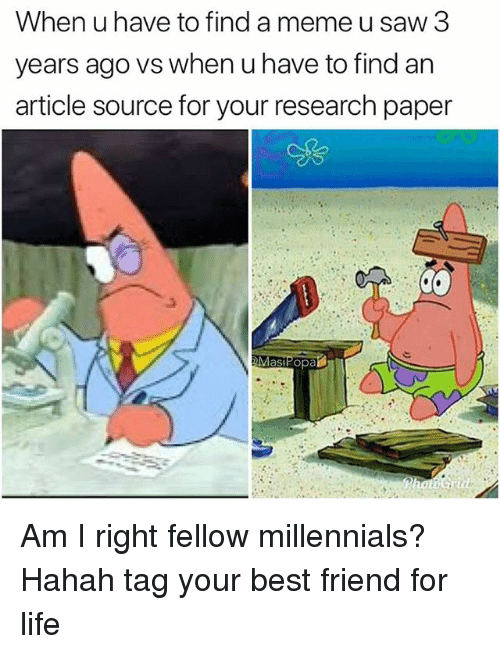
This is really how I feel right now about this literature review and the research paper. While the lady who went over the library indexes with us on Monday was very thorough, I am still just so overwhelmed by it. The one and only time I did a literature review was last semester and though it went well, I don’t remember much about it. I think I may have blacked out while finishing it. It’s not the work that really gets to me. I guess it’s just trying to make sure I have the right topic. One of my ideas feels way too broad and the other way too narrow. But I don’t know how to widen or narrow them down and for the life of me, I can’t think of any other topic that I could possibly research right now. Even if it was a life or death situation, there’s nothing that comes to mind. I don’t know why I keep drawing a blank. I did like that the indexes on our websites are broken down by different subjects of studies: nursing, criminal justice, social work, etc. I think that will help me figure out a proper topic. But that’s why I picked the Patrick meme because it’s so relatable right now. Minus the best friend tag thing.

Research is beneficial. I don’t think that needs to be reiterated. Everyone knows that research is an important component of any kind of field of interest. Social work especially because things and we (hoomans) are evolving all the time, so we need to keep up with new changes and trends. What may have once been crazy to think about may be totally normal now and vice versa. Things we didn’t think we ever had to worry about our now our number one problem/issue. So yeah, research is very much relevant in the social work field.

Research opens our eyes to things we didn’t think were possible. Research tells us what is working and what isn’t, who it is working for and who it isn’t. It gives up the opportunity to grow as social workers (or workers of whatever field you may be in) and to reach more people and help them in ways never thought imaginable. Research evolves our field and thought process. Without it, we would be stuck in the same way of thinking that our forefathers were, that Darwinism is real and the truth and that cold turkey is the best way to quit anything. We need research to grow and to learn and be the best version of social workers that social workers can be.

I don’t think there’s any one way that social workers “should look” at research. It’s just like with anyone else: some people like it, some people don’t. If you don’t like research (or the act of completing it) as a social worker, that’s totally fine, no one is forcing you to really do it. But you do have to acknowledge and respect the research when new information comes out. You can’t just push to the side research you don’t agree with or new research information just because you want to. As a social worker, you have to be able to take in all these new bits of useful information and use them properly. New techniques, new terms.

I don’t think social workers really have the option to choose between research and helping their clients, if they are an interactive social worker. As a social worker, you’re meeting new clients with different needs than their last so the way you help new clients is going to be totally different. If not, that’s fine but that’s pretty unlikely that you’ll find someone with the same story and the same needs. Research is there to help navigate and find those new ways of offering assistance so if you’re looking to be the best help for your client and be the best social worker that you can be, you are consistently going to be looking at research and gathering ideas on how to help your client. You can’t have one without the other. Your interactions with clients can also help improve research, either current or future. So I believe that research and helping clients are just different sides of the same coin.

Literature review + me = not 2gether 4ever

Do you have what it takes to write an effective literature review? What particular strengths would you build upon and what are the areas that you believe need attention when you start to develop the literature review? Share an image or images that best represent your thoughts and feelings about the literature review assignment.

I think if I actually put in enough time to do the work, I can write an effective literature review. The first one I wrote was just last semester and I had no idea what the heck to expect so it completely through me into a panic. I started really early so I wouldn’t get overwhelmed and ended up getting an A which was really impressive for myself, but I think that’s because I gave myself so much time to work on it and not be pressed for it. I think that will be my biggest issue again this semester.

Actually, that’s a lie.

I think my biggest issue will be figuring out what exactly to do my literature review on. I feel like my topic (parenting techniques and effects on child development) is slightly broad compared to the articles I saw on EBSCO, but also specific because I feel like there isn’t that much research and studies done on it. I don’t want to give up on it just because I think it will be challenging, but I don’t want to get into a topic that is going to give me so much grief because I can’t find enough to make a literature review out of it.

It’s a very confusing time for me and literature reviews. Definitely a love hate relationship where I love to hate literature reviews.

This. This is me. But blonde.
Design a site like this with WordPress.com
Get started